Waste as a resource, at the point of generation
Every year Italy generates large volumes of agricultural residues, digestate from biogas and biomethane plants, and end-of-life tyres (ELTs). Today these streams are largely transported off-site for disposal, with high logistics and handling costs for operators.
Our approach is different: to convert them into resources at the point of generation. By cutting transport, farms, biomethane plants and recyclers can valorise on-site what was previously a cost item.
This is the idea behind MoDi, the project we are presenting at SMAU Pescara.
What MoDi is
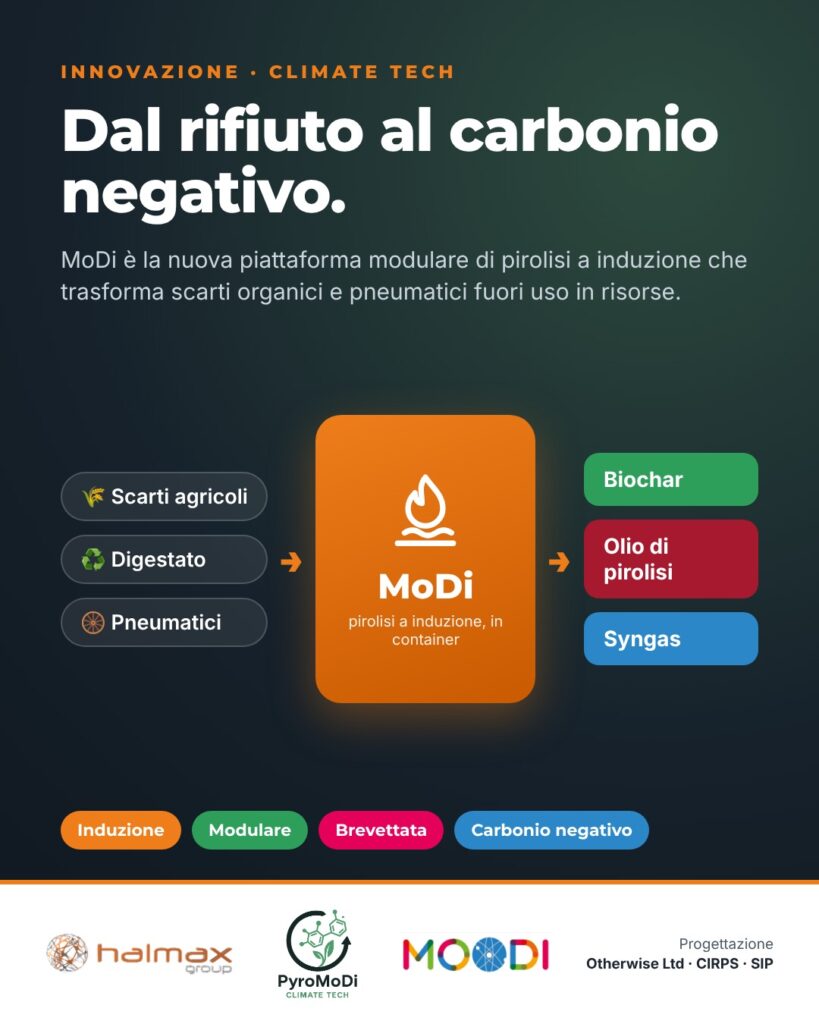
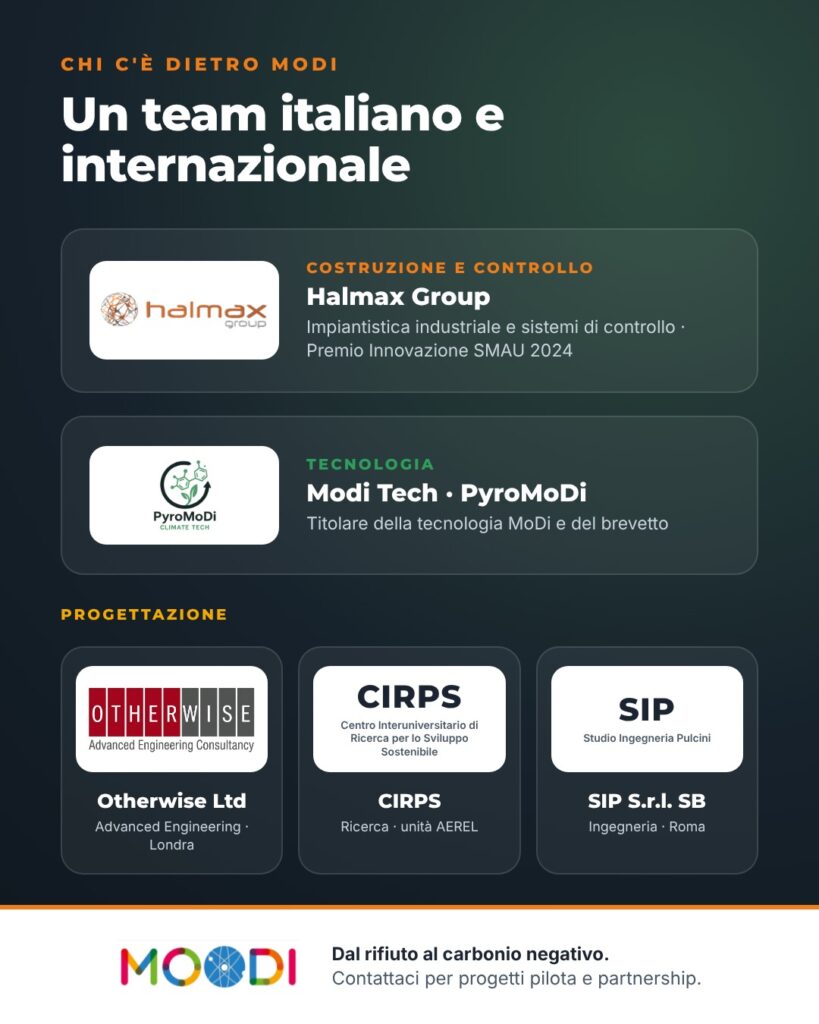
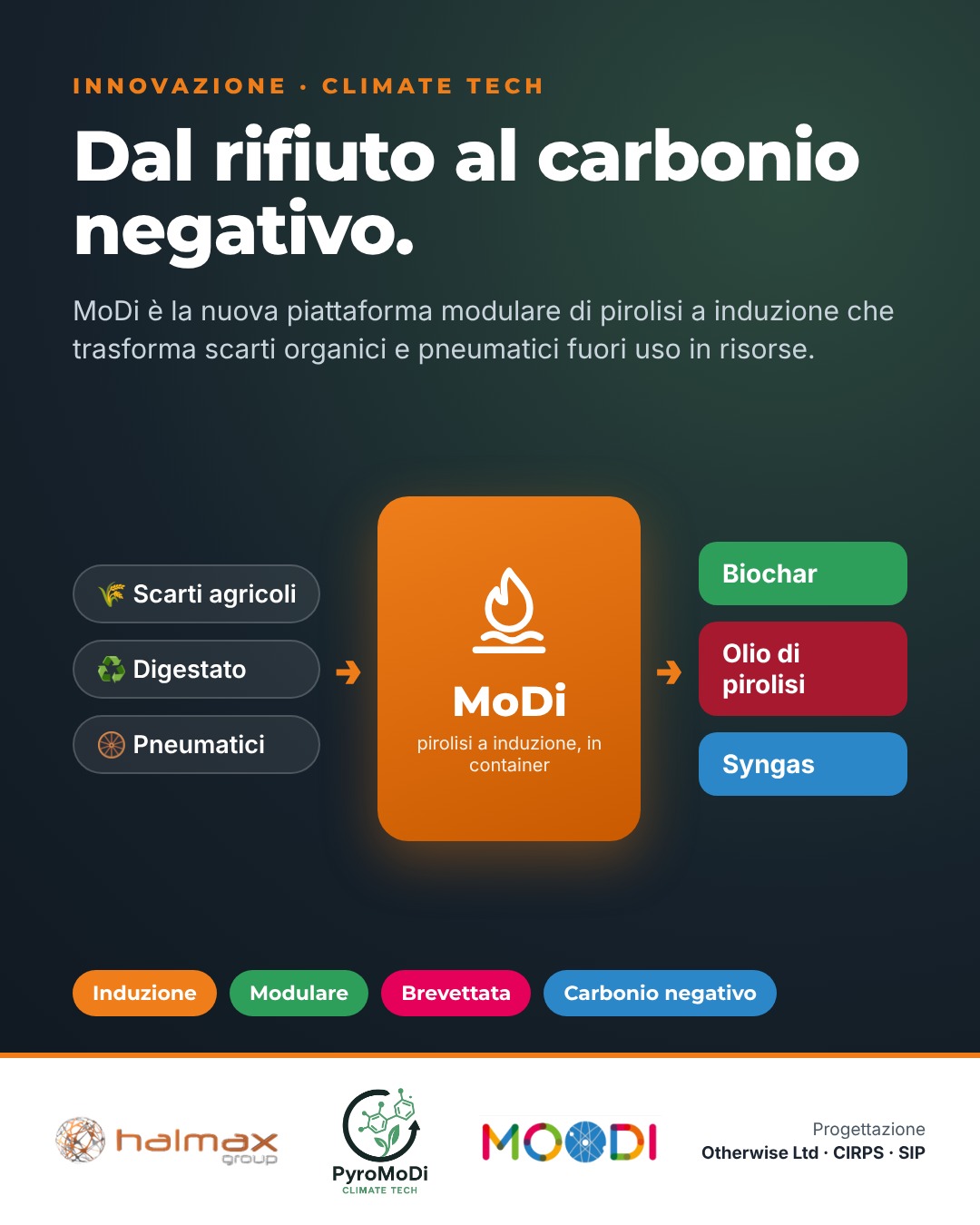
MoDi is a new modular pyrolysis platform that we are developing together with our partners.
Pyrolysis is a controlled thermal process carried out in an oxygen-free atmosphere. From a single process cycle, MoDi delivers three products:
- Biochar, a solid material rich in stable carbon
- Pyrolysis oil, a liquid fraction with downstream value
- Syngas, a reusable gas mixture
The same unit processes different feedstocks — agricultural biomass, digestate and end-of-life tyres — and returns marketable outputs.
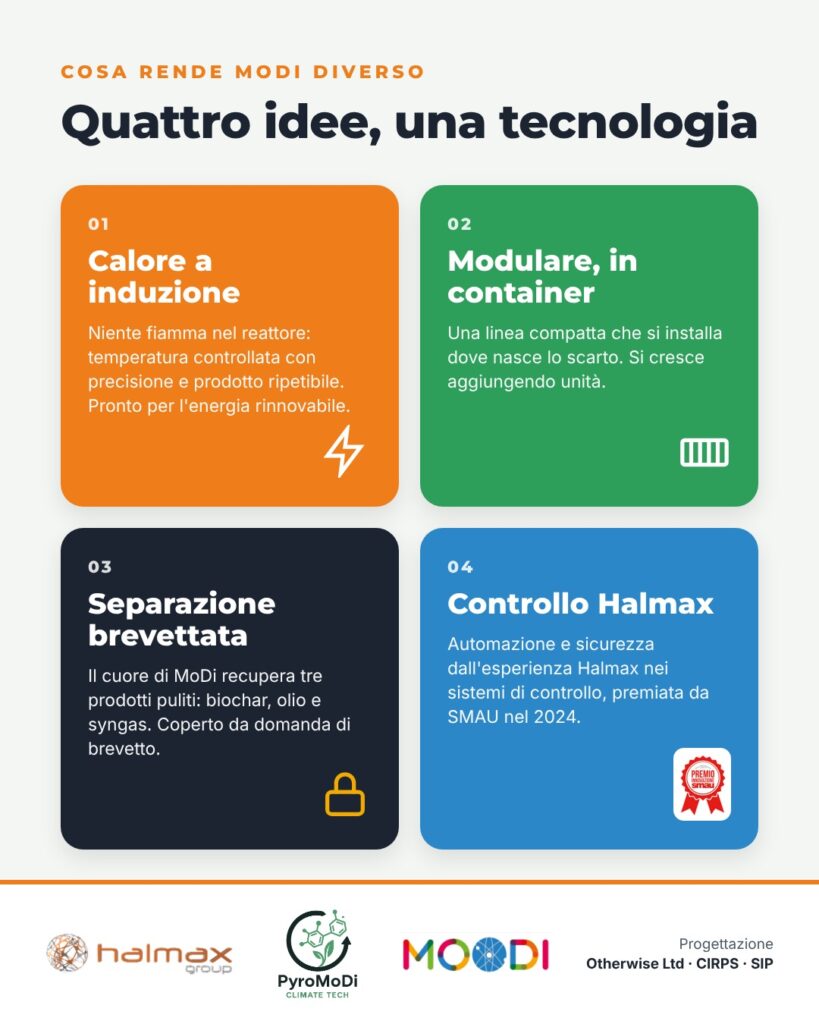
Four features that set MoDi apart
Induction heating
There is no flame inside the reactor. Heat is supplied by induction and temperature is precisely controlled, ensuring consistent product quality from batch to batch. The unit is fully electrically powered and can therefore run on renewable energy.
Modular, containerised design
MoDi is a compact, containerised line installed where the waste is generated: on a farm, at a biomethane plant, at a recycling facility. Capacity is scaled up by adding further units, with no need to re-engineer the plant.
Patented separation system
The core of the technology is the separation system, which recovers the three products as clean fractions in a closed loop. The solution is covered by a patent application.
Process control and safety
We bring Halmax’s experience in industrial control systems to MoDi — the same expertise that SMAU recognised in 2024 with a technological innovation award. Process control and safety are engineered into the plant from the design stage.
Why we call it carbon-negative
Biochar locks carbon in a stable form for centuries. Instead of being released back into the atmosphere, the carbon contained in the feedstock remains sequestered in the solid product.
Each MoDi unit therefore delivers two outcomes at once: it valorises a waste stream and removes CO₂ from the atmosphere. This removal can generate certified carbon removal credits, an additional revenue stream for the host site.
Next step: the pilot unit
We are now working on the first MoDi pilot unit, and we are looking for companies to join as partners or pilot sites.
If you manage agricultural biomass, digestate or end-of-life tyres, get in touch: we will assess together how to deploy MoDi at your facility.